NYPANS
No Child Left Untreated:Fighting for Insurance Coverage for PANS/PANDAS in New York
The State of PANS/PANDAS Care in New York
For some children, sudden and severe changes in behavior, mood, or mental health may be caused by an underlying medical condition.
Children across New York State are suffering from untreated PANS/PANDAS, neuroimmune conditions that can cause sudden, dramatic psychiatric deterioration and may be triggered by infections, including strep. These conditions remain under-recognized and undertreated, while insurance barriers prevent families from accessing medically necessary care. The burden on families is immense. On top of the emotional, physical, and financial toll of caring for a sick child, families face the added burden of fighting insurance denials and appeals just to access treatment.
New York has a growing number of physicians who treat PANS, but insurance coverage won't allow them to.
Upstate Golisano Children’s Hospital in Syracuse is Central New York’s only dedicated children’s hospital, serving as the regional pediatric referral center for 17 counties and 1.8 million residents. Yet even here, physicians face insurance barriers that can prevent children with PANS/PANDAS from accessing medically necessary treatment. When potentially treatable illness goes untreated, children risk prolonged suffering, chronic disability, and lasting impacts on their ability to learn, work, and function. Delays in care today can have lifelong consequences—not only for children, but for their families.
Cover the care, and the care will follow.
Many physicians are reluctant to take on PANS/PANDAS cases—not necessarily because they doubt the potential benefits of treatment, but because they face the burden of repeated insurance appeals and the time required to fight for coverage within an already strained healthcare system. When medically indicated treatments are covered, physicians can focus more of their limited time on patient care rather than insurance battles. Improved coverage can also help more children access care close to home, rather than traveling out of state to find providers willing and able to treat them.
New York families are reporting that they are considering leaving the state to access care for their children. Others are traveling as far as California. Families should not have to leave their home state to find care for their children.
A few minutes of your time could save a child's life.
Send a personal letter to your State Senator and Assemblymember asking them to support S10208 and A9659-A.
Understanding the illness
For some children, OCD, crippling anxiety, refusal to eat, tics, psychosis, or suicidal thoughts can strike seemingly overnight. When these symptoms occur abruptly after an infection, they can be hallmark signs of PANS (Pediatric Acute-onset Neuropsychiatric Syndrome) or PANDAS (Pediatric Autoimmune Neuropsychiatric Disorders Associated with Streptococcal Infections). Urgent medical evaluation and treatment is needed, and children are being denied this care in New York because of insurance barriers to treatment.
Pediatric Acute-onset Neuropsychiatric Syndrome
PANS is considered the broader umbrella term that includes both strep and other infections. PANS may be triggered by a range of infections or other immune-mediated phenomena.
Pediatric Autoimmune Neuropsychiatric Disorders Associated with Streptococcal infections
First identified in the 1990's in children who had strep infections. PANDAS is considered a subset of PANS in which symptoms are associated with a Group A Streptococcal infection.
How it happens
-
Step 1
The Trigger
While most children who catch an infection never develop PANS/PANDAS, some children with certain predisposing factors develop psychiatric symptoms after a common infection, such as strep throat, the flu, or walking pneumonia, which is caused by the bacterium Mycoplasma pneumoniae.
-
Step 2
Immune System Misfires
Instead of simply fighting off the infection, the immune system also mistakenly targets the brain, causing inflammation in the basal ganglia. Because this area helps regulate movement, behavior, and emotion, these children can experience sudden obsessive-compulsive behaviors, severe anxiety, food restriction, tics, and behavioral regresion.
-
Step 3
Psychiatric Emergency
A child with no history of behavioral health problems suddenly cannot function. These children often don’t respond to standard treatments like therapy or SSRIs. Without awareness of PANS, providers and families are left searching for answers, and getting the right care is harder still.
families enter a state of crisis as they helplessly witness their children experience:
- OCD
- Anxiety
- Restrictive Eating
- Extreme mood swings
- Severe depression
- Suicidality
- Rage
- Aggression
- ADHD
- Increased urinary frequency
- School refusal
Why the right treatment matters
Symptoms may not respond to typical psychiatric medications and therapies. But when infections are treated and the immune system is properly managed under specialist care, children can recover.
Share Your Story
Create a video we can use in our materials, or send it to your legislators.
Up to 90 seconds on your phone. Prefer to write? The form takes that too.
Who We Are
What We Do
We’re fighting to ensure every family can access PANS/PANDAS treatment when their physician determines it is medically necessary—not just families who can afford to pay out of pocket.
We’re asking New York State to require insurance companies to cover PANS/PANDAS treatment so children can get care early, instead of carrying chronic illness and lasting disability into adulthood.
These bills have been stuck in committee for nearly a decade. We’re meeting weekly with state leaders to change that, and to get them passed in 2027.
The Case for Coverage
Why Insurance?
Seventeen states have already acted to ensure children with PANS and PANDAS can get the treatment they need. New York has not, and our children are falling behind because of it.
The Time Has Come
Research at institutions including Columbia, Stanford, Yale, Harvard, and Johns Hopkins is advancing our understanding of PANS/PANDAS and informing new approaches to treatment. Yet most insurance companies have not changed their coverage policies to reflect these developments.
Aetna has chosen to cover PANS/PANDAS treatment nationwide without a state law requiring it, demonstrating that broader coverage is possible. Expanding access to medically necessary care may also help reduce the long-term financial costs of untreated illness for insurers, families, and the healthcare system.
Only a subset of children with PANS/PANDAS will require more costly treatments. But for those children, access to care can be life-changing—and, in some cases, potentially lifesaving. Suicide is a documented and devastating risk for some individuals experiencing these severe conditions, making timely access to appropriate care a matter of urgent importance.
States that have passed mandates
- Arkansas
- California
- Colorado
- Connecticut
- Delaware
- Georgia
- Illinois
- Indiana
- Kansas (state employees only)
- Louisiana
- Maryland
- Massachusetts
- Minnesota
- New Hampshire
- Oregon
- Rhode Island
- Virginia
World PANS/PANDAS Awareness Day
A Historic First
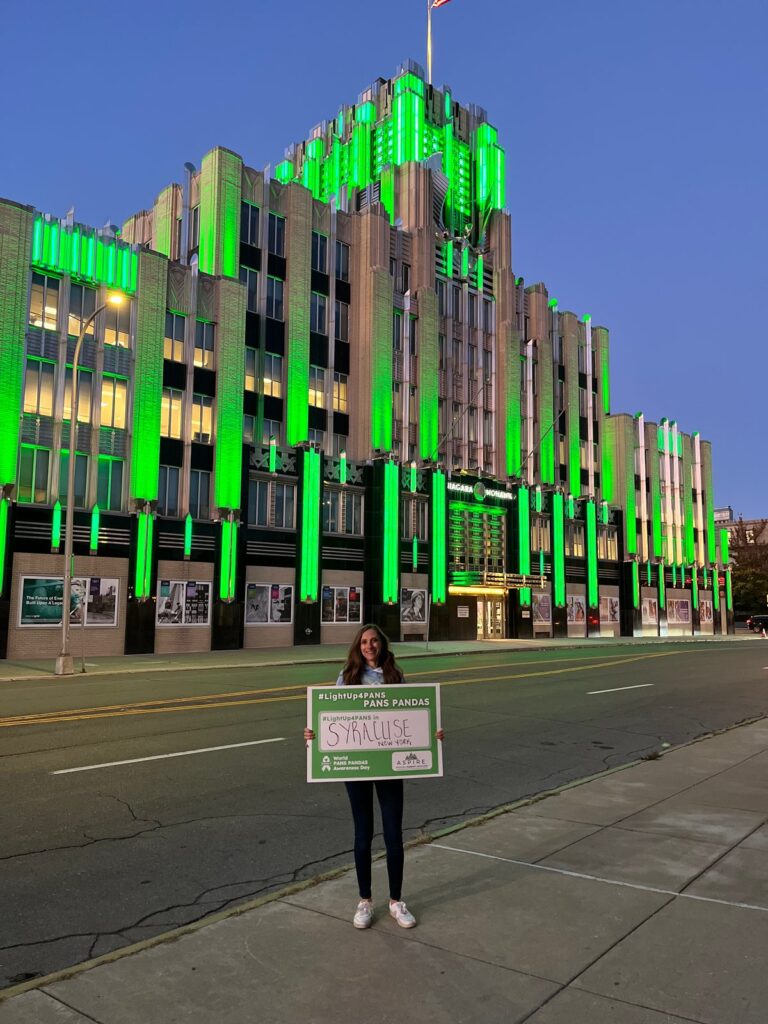
By order of Governor Kathy Hochul, 16 landmarks across New York State illuminated green for PANS/PANDAS awareness on October 9, 2026. This historic statewide recognition signaled growing public and legislative attention to these often-overlooked conditions—and affirmed that the health and well-being of affected children and families matter to New York State.
In collaboration with the New York State Office of the Chief Disability Officer, advocates broughtstatewide visibility to these often-overlooked neuroimmune conditions. Sixteen landmarks—from Niagara Falls to New York City—illuminated green, marking what was recognized as the largest coordinated landmark illumination for PANS/PANDAS awareness within a single geographic region worldwide. Sites included Niagara Falls, the Governor Mario M. Cuomo Bridge, the Empire State Plaza, and Moynihan Train Hall. Together, these landmarks brought visibility to children and families who deserve to be seen, heard, and supported.
In Syracuse, this movement comes to life through ASPIRE (Alliance to Solve PANS & Immune-Related Encephalopathies). Each year, ASPIRE brings together community volunteers, affected families, healthcare professionals, and advocates to raise awareness of PANS/PANDAS, including through the green illumination of the National Grid Building in downtown Syracuse.
The lights were a significant milestone for the visibility of these devastating conditions. But awareness only goes so far. The next step is getting PANS/PANDAS recognized in policy.











Our Supporters
Organizations Supporting Our Bills